
Stress, Cortisol, and Aging: How Chronic Stress Accelerates Aging — and What You Can Do About It
Summary
Cortisol is your body’s built-in alarm system — and when it works properly, it protects you. But chronic stress can throw cortisol off balance, leading to more inflammation, poorer sleep, and accelerated aging. This post explains how stress affects your body in everyday terms, and how small daily habits can help restore a healthier stress response and support your healthspan.
Cortisol: Your Body’s Alarm System — and Its Firefighter
Cortisol often gets labeled as “the stress hormone,” but that’s only part of the story. Think of cortisol as both an alarm and a firefighter:
The alarm alerts your body to a challenge.
The firefighter arrives quickly to keep inflammation under control.
Under normal circumstances, this system works beautifully. When you face a stressful moment — a difficult conversation, a near fall, a sudden noise — cortisol rises to help you stay focused and safe. At the same time, it keeps inflammation from getting out of control.
In short: Short-term stress = a healthy, protective response.
When Stress Doesn’t Turn Off: The Alarm Keeps Ringing
The problem isn’t cortisol itself — it’s chronic cortisol.
If stress becomes constant, like a fire alarm that never shuts off, the body eventually stops responding to it the way it should.
A simple analogy:
Imagine your home smoke detector going off all day. After a while, you’d stop reacting to it. The alarm would keep blaring, but you’d tune it out.
Your immune cells do the same thing.
When cortisol stays high for too long:
Your cells stop responding normally
Inflammation begins to rise (even though cortisol is high!)
Your natural day-night cortisol rhythm flattens
You may feel more tired, wired, or inflamed
This is why chronic stress is linked to:
Higher levels of inflammatory markers
Increased risk of heart disease
Poorer sleep
Higher risk of cognitive decline
Faster biological aging
This “burnout” of the stress system is known as cortisol dysregulation — and it’s one of the hidden drivers of accelerated aging.
The Good News: Stress Resilience Is Trainable
Just like strengthening a muscle, you can strengthen your ability to handle stress. Research shows that simple daily habits can help restore healthier cortisol patterns, reduce inflammation, and improve energy, sleep, and emotional regulation.
Here’s what helps:
Light movement (like a 10-minute walk) lowers inflammation and resets your nervous system.
Mind-body practices (breathing exercises, tai chi, or meditation) calm your stress response and improve cortisol rhythm.
Consistent sleep routines reinforce the natural rise and fall of cortisol across the day, improving both immunity and daytime energy.
These practices don’t require perfection — just consistency. Small, steady steps add up.
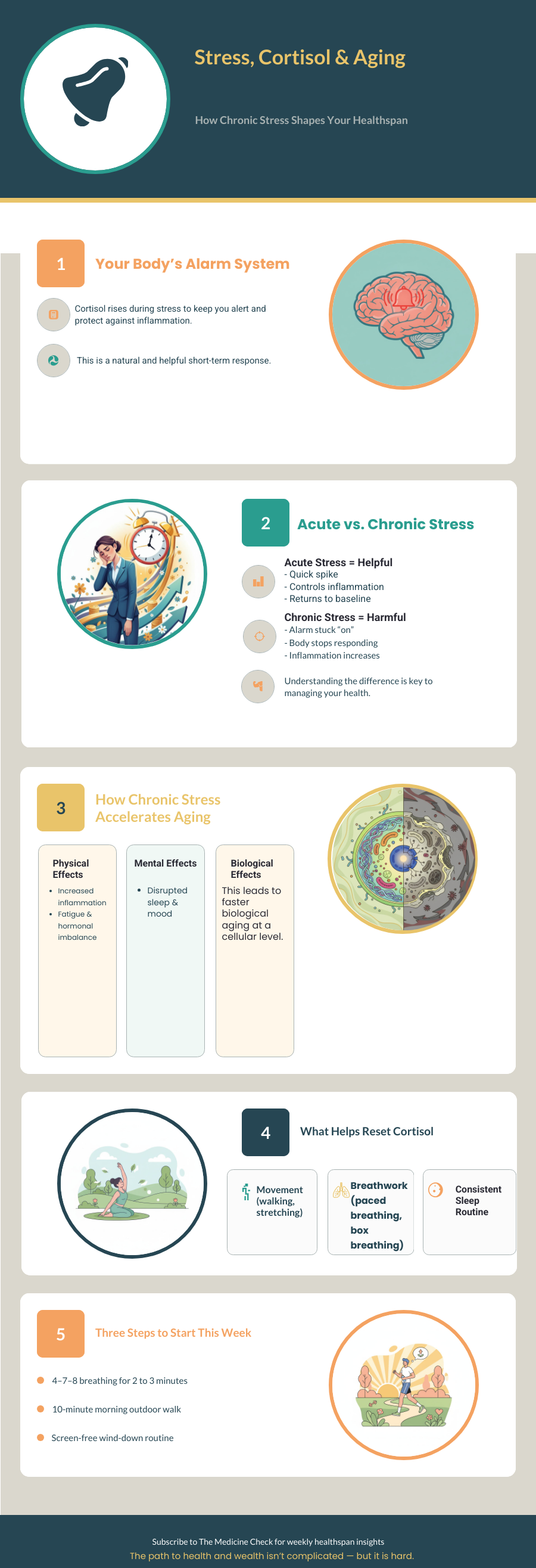
Infographic describing the affects of stress
Three Steps to Start This Week
If you’re ready to support your stress resilience and your healthspan, try one of these:
Practice 4–7–8 breathing for 2–3 minutes to calm the nervous system.
Take a 10-minute outdoor walk in the morning to help regulate your cortisol rhythm.
Create a simple nighttime routine to support consistent sleep (dim lights, no screens 30 minutes before bed).
Want weekly, evidence-based tips for living longer and better?
👉 Subscribe to The Medicine Check for healthspan insights.