
Recovery Is Where Healthspan Is Built
Why rest, sleep, and recovery matter just as much as exercise
Summary
When we think about healthy aging, we often focus on doing more—more movement, more steps, more effort. But the truth is this: your body doesn’t get stronger during stress, it gets stronger during recovery. Sleep, rest between workouts, and adequate nutrition are not optional extras. They are foundational to preserving muscle, brain health, and long-term resilience as we age.
Recovery Is When the Body Repairs and Adapts
Stress isn’t inherently bad. Exercise, learning, and even short-term challenges all stimulate growth. But stress only leads to improvement if the body has time and resources to recover afterward. Without recovery, stress accumulates—and that accelerates aging rather than slowing it.
A helpful analogy is remodeling a house. Exercise and daily demands create the “work orders.” Recovery is when the repairs actually happen. If repairs never occur, the structure weakens over time. This is why chronic fatigue, lingering soreness, mood changes, and declining performance are often signs of under-recovery, not lack of effort.
Sleep Quality Matters More Than Most People Realize
Most adults do best with 7–9 hours of sleep per night, with 7–8 hours showing the strongest association with positive long-term health outcomes. But duration alone isn’t enough. Sleep quality—how well and how consistently you sleep—matters just as much, if not more.
Poor sleep quality independently predicts chronic pain, depression, anxiety, and cognitive decline—even when total sleep time is “normal.” Fragmented or restless sleep prevents the brain and body from fully restoring themselves. This is why cognitive behavioral therapy for insomnia (CBT-I), which focuses on improving sleep quality rather than relying on medications, is now the first-line recommended treatment for chronic insomnia.
Sleep medications may provide short-term relief, but they do not restore natural sleep architecture and carry meaningful risks—especially in older adults. Improving sleep habits, routines, and cognitive patterns around sleep offers far more durable benefits for healthspan.
Recovery Requires Fuel and Space Between Stressors
Recovery isn’t just about sleep. Spacing out intense exercise sessions and consuming adequate protein are essential for preserving muscle and function over time.
Most adults benefit from at least 48 hours between high-intensity workouts, with at least one true rest day per week. Exercise breaks tissue down; recovery rebuilds it stronger. Without sufficient recovery time, the risk of injury, fatigue, and functional decline rises.
Protein intake also matters. While 0.8 g/kg/day meets basic needs for sedentary adults, physically active and aging adults benefit from higher intake—roughly 1.2–2.0 g/kg/day—spread throughout the day. This supports muscle repair, bone health, and metabolic resilience. Recovery is not passive; it is an active biological process that requires adequate fuel.
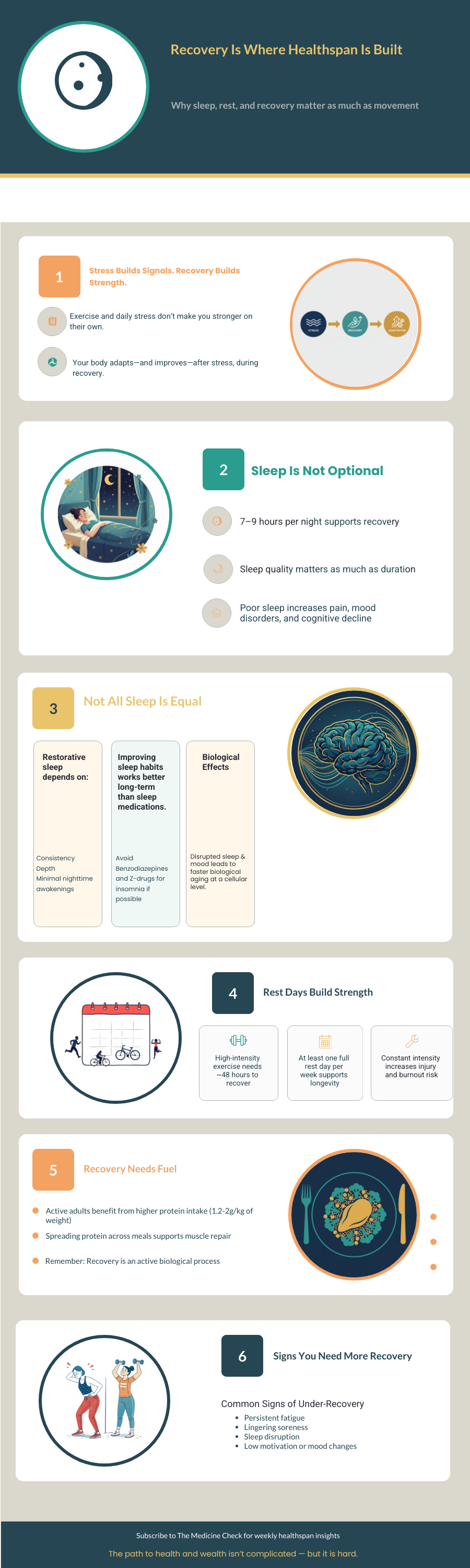
Infographic showing the key components to recovery.
Call to Action: Build Recovery Into Your Healthspan Plan
This week, choose one small recovery-focused action:
Protect your sleep by setting a consistent bedtime and wake time
Respect rest days between intense exercise sessions
Support repair with adequate daily protein, spaced across meals
The path to health and wealth isn’t complicated — but it is hard. Recovery isn’t weakness. It’s how longevity is built.