

Post-Holiday Financial Recovery: Resetting Without Regret
Summary
The days after the holidays can bring a familiar feeling: financial fatigue. Extra spending, disrupted routines, and less attention to money decisions can create anxiety or regret. But just like physical recovery after stress, financial recovery isn’t about fixing everything at once—it’s about regaining clarity, reducing urgency, and moving forward intentionally. Wealthspan is built through reflection and alignment, not guilt.
Holiday Spending Is Normal—And Temporary
Holidays naturally disrupt routines. Travel, gatherings, gift-giving, and shared meals often come with higher-than-usual spending. This doesn’t represent failure or lack of discipline—it reflects a season designed around connection, generosity, and celebration.
Problems arise when holiday spending is followed by panic or self-criticism. That urgency can trigger reactive decisions, such as overcorrecting budgets, abandoning long-term plans, or avoiding finances altogether. Just as short-term physical stress doesn’t undo years of healthy habits, a single month of higher spending doesn’t define your financial future.
Why Regret Undermines Wealthspan
Regret narrows perspective. When financial decisions are driven by emotion rather than reflection, people tend to make short-term fixes that feel productive but don’t last. This mirrors chronic stress physiology: urgency crowds out thoughtful planning.
A healthier approach is to view December as data—not judgment. Reviewing spending patterns without blame allows you to identify what mattered, what felt misaligned, and where small adjustments could make next year easier. Wealthspan improves when decisions are informed, not rushed.
Recovery Means Resetting Systems, Not Willpower
Post-holiday financial recovery works best when you focus on systems rather than motivation. Instead of trying to “make up” for December, return to simple foundations:
Revisit automated savings and retirement contributions
Review your annual net worth statement to understand trends
Clarify one rule that protects you from stress-driven decisions
These steps reduce mental load and restore a sense of control. Sustainable systems allow you to move forward calmly, even after disruption.
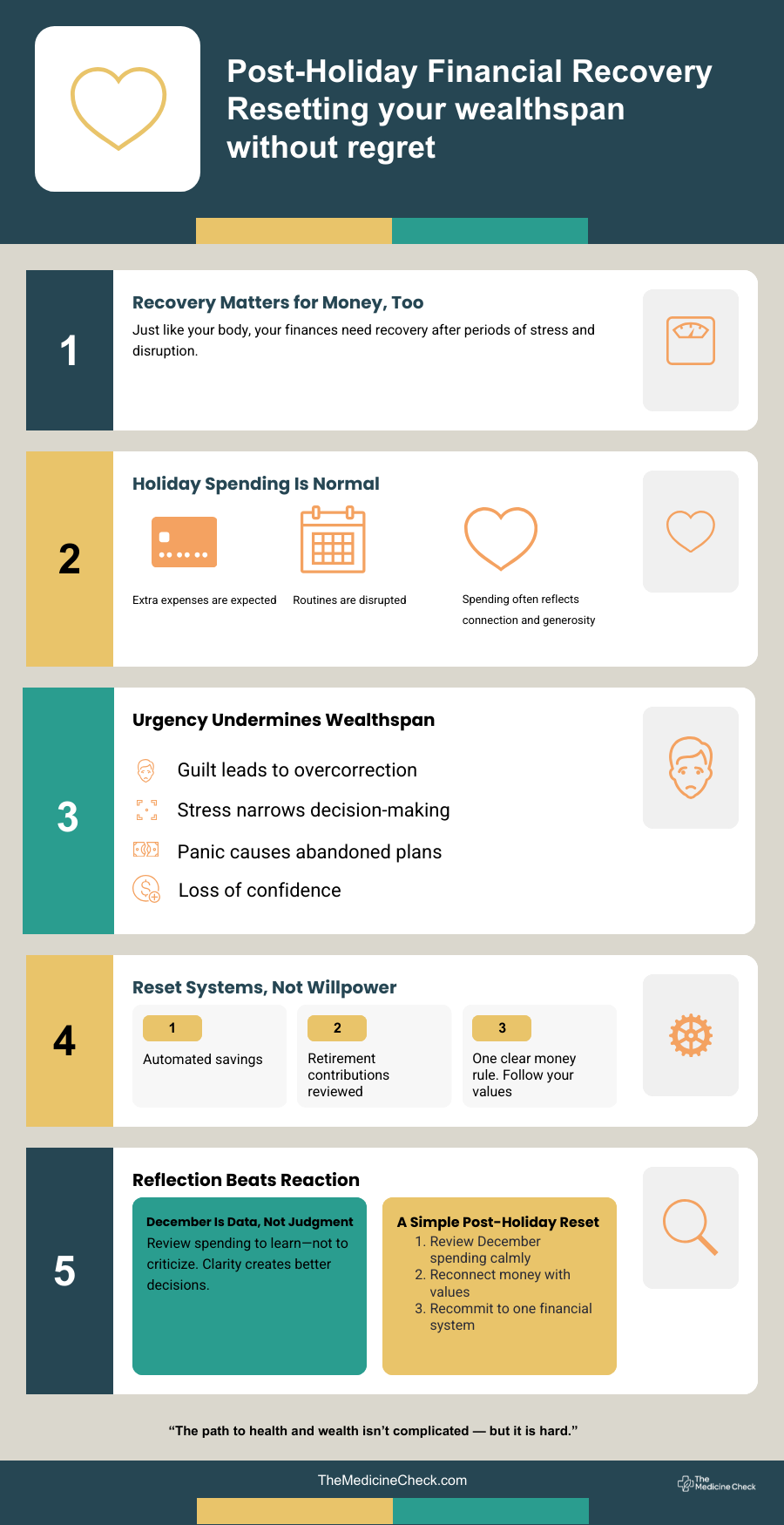
An infographic highlighting the importance of reflection on spending and values.
Recover, Then Realign
As the year closes, choose one gentle reset:
Review December spending without judgment—look for patterns, not mistakes
Reconnect spending with values, not guilt or restriction
Recommit to one financial system that supports next year’s goals
The path to health and wealth isn’t complicated — but it is hard.
Recovery makes the hard parts sustainable.