
Maintaining Healthspan During the Holidays: Flexibility Over Perfection
Summary
The holidays disrupt routines: sleep, meals, movement, and schedules all change. That disruption can create anxiety about “falling off track,” but healthspan isn’t built on perfection. It’s built on flexibility, recovery, and returning to supportive habits without guilt. Short periods of change do not undo long-term health, especially when we protect the basics.
Holiday Disruption Is Normal—and Temporary
The end of the year brings travel, late nights, shared meals, and emotional stress. These changes are expected and, in many cases, meaningful. From a healthspan perspective, the problem isn’t disruption. Instead, it’s how we interpret it.
When people view temporary changes as failure, they’re more likely to abandon helpful habits altogether. But the human body is resilient. A few weeks of altered routines do not erase years of healthy behaviors. Just as acute physical stress can be adaptive, short-term lifestyle disruption does not accelerate aging when followed by recovery.
Stress, Recovery, and What Actually Matters
During the holidays, stress often increases. This can affect sleep quality, appetite regulation, and energy levels (all the things we’ve talked about before). The goal isn’t to eliminate stress—it’s to prevent it from becoming chronic.
Protective behaviors matter most during these periods:
Prioritizing sleep consistency when possible
Continuing light movement, such as walking
Eating regular meals, even if they’re imperfect
These anchors help regulate stress hormones and support recovery, even when everything else feels irregular.
Healthspan Is Preserved by Returning, Not Restricting
One of the most damaging patterns during the holidays is overcorrection: rigid rules, restriction, or guilt-driven behavior. These approaches increase stress and reduce sustainability.
Healthspan is better preserved by gently returning to supportive routines:
Resume normal sleep schedules as soon as feasible
Re-establish movement without “making up” for time off
Focus on nourishment, not compensation
Consistency over time, not intensity in the moment, is what protects function, independence, and longevity.
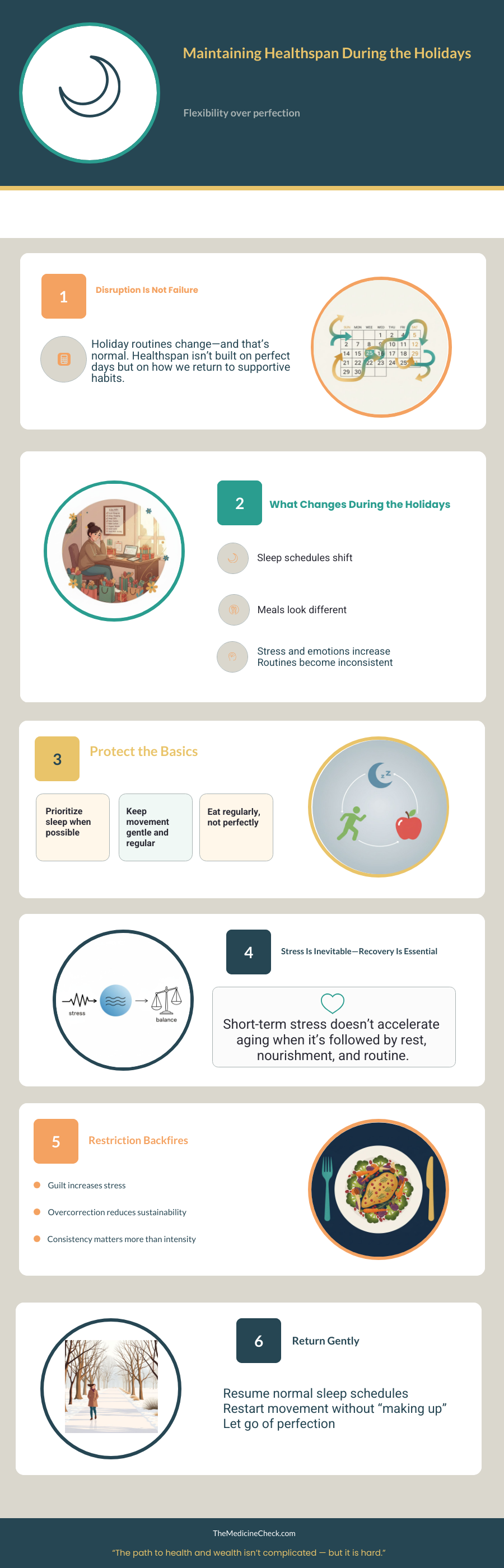
Infographic showing the importance of flexibility of health routines over the holidays.
Protect the Basics
As the year comes to a close, choose one simple focus:
Protect sleep as much as possible, even during busy days
Keep movement gentle and regular, not extreme
Let go of perfection and return to routines without guilt
The path to health and wealth isn’t complicated — but it is hard.
Flexibility is what makes it sustainable.