

Blood Pressure Medication Side Effects Are Not All the Same
A new JAMA analysis suggests tolerability varies by drug class and regimen. For healthy aging, the goal is not simply a lower number. It is blood pressure control people can actually live with.
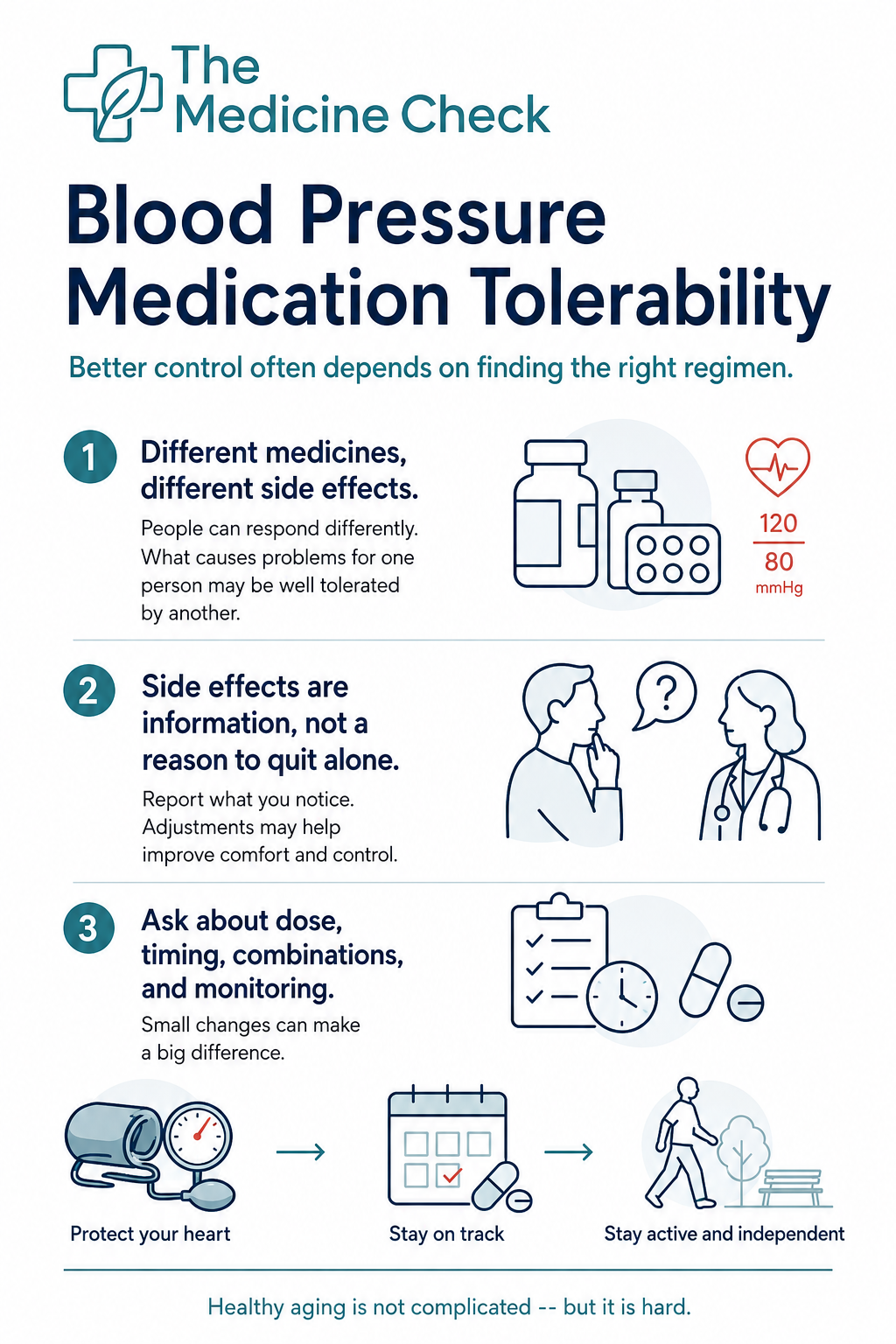
Editorial infographic titled Blood Pressure Medication Tolerability, showing a blood pressure cuff, medication calendar, and walking figure with three takeaways about different side effects, not stopping medication alone, and discussing dose, timing, combinations, and monitoring.
High blood pressure is one of the most important preventable risks for heart attack, stroke, heart failure, kidney disease, cognitive decline, and dementia. That is why blood pressure treatment is such a central part of healthy aging.
But there is a quieter part of the story that matters just as much: tolerability.
A medication only helps if a person can keep taking it safely and consistently. Dizziness, swelling, cough, fatigue, frequent urination, electrolyte changes, or feeling lightheaded when standing can turn a good treatment plan into one that is hard to live with. For older adults, those symptoms can also affect confidence, mobility, fall concern, and independence.
A new network meta-analysis published in JAMA on May 28, 2026 adds useful nuance. It does not say blood pressure medication is bad. It says side effects and treatment discontinuation are not the same across all drug classes and combinations. That matters because many people who struggle with one blood pressure medication may still have other reasonable options.
What The New Study Looked At
The JAMA analysis reviewed 716 double-blind randomized clinical trials involving 159,362 participants. The researchers compared short-term adverse effects and treatment discontinuation across five major blood pressure medication classes and combinations: ACE inhibitors, angiotensin receptor blockers (ARBs), beta-blockers, calcium channel blockers, thiazide and thiazide-like diuretics, and combinations of these medicines.
The average participant age was about 55, and the average follow-up was about 9 weeks. That is important. This was a large and useful analysis, but it was mostly about short-term tolerability in trial populations, not decades of medication use in frail older adults.
The main outcome was stopping the assigned medication because of an adverse event. The researchers also looked at symptoms such as headache, dizziness, edema, and cough.
The Main Takeaway: Tolerability Depends On The Regimen
The study found that discontinuation due to adverse events differed by drug class and combination. Compared with placebo, calcium channel blockers, ACE inhibitor plus calcium channel blocker combinations, and beta-blocker plus thiazide diuretic combinations were associated with higher odds of stopping treatment because of adverse events.
ARB-containing regimens, including ARB monotherapy and ARB plus calcium channel blocker combinations, had fewer discontinuations due to adverse events than placebo in the analysis. The authors noted that some regimens appeared to produce net symptomatic improvement, possibly because lowering blood pressure can reduce symptoms such as headache in some people.
That does not mean ARBs are automatically the best choice for every person. Kidney function, potassium levels, pregnancy status, other medications, insurance coverage, race and ancestry, diabetes, chronic kidney disease, heart failure, prior stroke, and individual response all matter. But it does reinforce a practical point: if one medication is hard to tolerate, the answer may be adjustment, substitution, dose change, timing change, or combination strategy rather than giving up on blood pressure control.
Why This Matters For Healthspan
Healthspan is not only about avoiding a future diagnosis. It is about preserving function, mobility, cognition, independence, and quality of life as long as possible. Blood pressure control supports that goal because uncontrolled hypertension can damage the brain, heart, kidneys, and blood vessels over time. The 2025 AHA/ACC multi-society guideline continues to emphasize blood pressure control, lifestyle habits, home monitoring, and risk-based medication decisions. The guideline lists a general treatment goal below 130/80 mm Hg for adults, with additional considerations for people who require institutional care, have limited predicted lifespan, or have other special circumstances.
At the same time, healthy aging also requires attention to the lived experience of treatment. If a medication causes dizziness, near-fainting, swelling, or a persistent cough, that is not just an inconvenience. It may affect walking, exercise, sleep, confidence, and adherence. This is where the healthspan lens is useful. The goal is not to win a single blood pressure reading. The goal is to reduce long-term vascular risk in a way that preserves daily function.
Side Effects Are Information, Not A Failure
Many people stop medication quietly because they do not want to complain, they assume side effects are unavoidable, or they worry their clinician will dismiss the concern. That can backfire. A better framing is this: side effects are information. They can tell the clinician whether the dose is too high, whether the medication is interacting with another drug, whether dehydration or electrolyte changes are part of the problem, whether blood pressure is dropping too low at certain times of day, or whether a different class might fit better.
Common medication-specific patterns can also guide the conversation. ACE inhibitors can cause cough in some people. Calcium channel blockers can cause ankle swelling. Diuretics can affect urination, sodium, potassium, or gout risk. Beta-blockers can contribute to fatigue or lower heart rate in some patients. ARBs are often well tolerated, but they still require attention to kidney function, potassium, and individual context.
These are general patterns, not a diagnosis. The practical point is to report what is happening rather than stopping a medication without guidance.
What About Older Adults?
Older adults are not homogenous. Everyone is different! A 68-year-old training for a hiking trip, an 82-year-old with several chronic conditions, and a 90-year-old in assisted living may have very different risk-benefit tradeoffs. Evidence supports treating hypertension in many older adults, especially when cardiovascular risk is high. But trials often include healthier participants and may underrepresent people with frailty, multiple conditions, or heavy medication burden.
That is why individualization matters. The 2025 AHA/ACC guidance emphasizes medication for many adults at or above key blood pressure and cardiovascular-risk thresholds, but it also notes that treatment goals need additional consideration in people with limited predicted lifespan or institutional care needs. For frail older adults, the conversation should include both benefits and harms: stroke prevention, heart protection, kidney protection, dizziness, syncope, kidney changes, electrolyte issues, and the person's goals.
This is not a reason to ignore high blood pressure. It is a reason to treat the person, not just the number.
Questions To Ask If A Blood Pressure Medication Feels Hard To Tolerate
Do not stop or change blood pressure medication on your own. But if side effects are making treatment hard, these are reasonable questions to bring to a clinician or pharmacist:
Could this symptom be related to my blood pressure medication, another medication, or the combination?
Should I check home blood pressure readings at different times of day?
Is my blood pressure dropping too low when I stand up?
Would a lower dose, different dosing time, or different medication class make sense?
Would a low-dose combination help control blood pressure with fewer side effects?
Do I need blood tests to check kidney function, sodium, or potassium?
Are any of my other medications increasing dizziness, dehydration, swelling, or fatigue?
What symptoms should prompt urgent care rather than waiting for the next visit?
The best blood pressure plan is usually not the most aggressive plan on paper. It is the plan that lowers risk, fits the person's overall health, and can be followed consistently.
The Bottom Line
Blood pressure medication tolerability is not a side issue. It is part of treatment quality. The new JAMA analysis suggests that adverse effects and medication discontinuation vary meaningfully across blood pressure drug classes and combinations. That gives patients and clinicians more room for shared problem-solving. If one medication causes problems, another approach may work better.
For healthspan, the target is durable prevention: protecting the brain, heart, kidneys, and blood vessels while preserving the strength, steadiness, confidence, and independence that make longer life worth living.
Keep Building Your Healthspan
- Track your yearly progress with the Annual Wealthspan + Healthspan Checkup Tracker.
- If medications are part of the story, review your list with the Anticholinergic Burden Calculator.