

Where science meets everyday wellness—expert analysis and actionable guidance to help you age smarter and stronger.

The Healthspan Report
How Much Should You Really Be Saving for Retirement?
Matters Most, Multicomplexity Tyson Garfield Matters Most, Multicomplexity Tyson Garfield

How Much Should You Really Be Saving for Retirement?

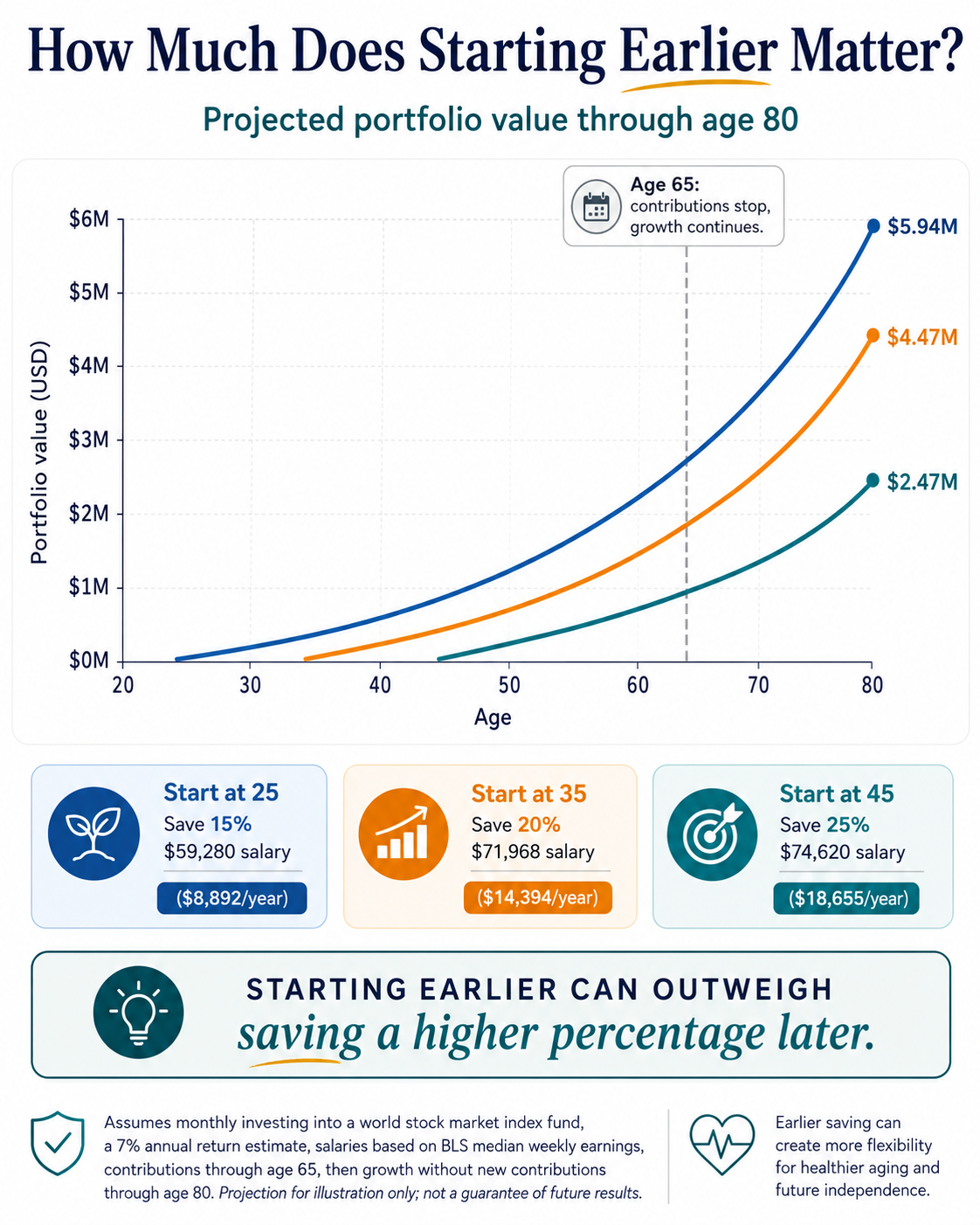
How much should you really be saving for retirement?

The common advice is to save 15% of your income, but the right number depends on when you start, how long you invest, and the kind of life you want to build. Using median U.S. salary data and a projected world stock market return, this post compares three savers who start in their 20s, 30s, and 40s.

The takeaway is clear: starting earlier can outweigh saving a higher percentage later.

But retirement planning isn’t only about maximizing your account balance. It’s about building both your wealthspan and your healthspan—so your money supports the life you want now and in the future.

Read More
Clarity Before Change: A Calm Financial Start to the New Year
Multicomplexity Tyson Garfield Multicomplexity Tyson Garfield

Clarity Before Change: A Calm Financial Start to the New Year

The new year often pushes us toward quick financial fixes—but lasting wealth doesn’t start with action. It starts with understanding. Before setting goals, cutting spending, or changing investments, taking time to gain clarity around your financial picture creates calmer decisions, less stress, and better long-term outcomes. January is the ideal moment to pause, observe, and build awareness—because sustainable change begins with clarity.

Read More
Cash Flow 101: Spend in Alignment With Your Values
Matters Most, Multicomplexity Tyson Garfield Matters Most, Multicomplexity Tyson Garfield

Cash Flow 101: Spend in Alignment With Your Values

Aligning your spending with your values is one of the most powerful steps you can take toward improving your wealthspan — the years of your life spent financially secure, independent, and purpose-driven. When you spend intentionally, your money starts working for you, not against you. This week’s post breaks down the evidence, psychology, and practical steps behind value-based spending so you can reduce financial stress and build a more meaningful financial life.

Read More