
Building Strength for Longevity: Muscle, Aging, and the Truth About Hormones
Summary:
As we age, we naturally lose muscle mass and strength—a process called sarcopenia—which makes falls, fractures, and loss of independence more likely. The most powerful tool we have to slow this decline is resistance-based exercise, started early and sustained over time. Hormone therapy can play a role in very specific, guideline-based situations, but it is not a shortcut or primary strategy for healthy aging or strength.
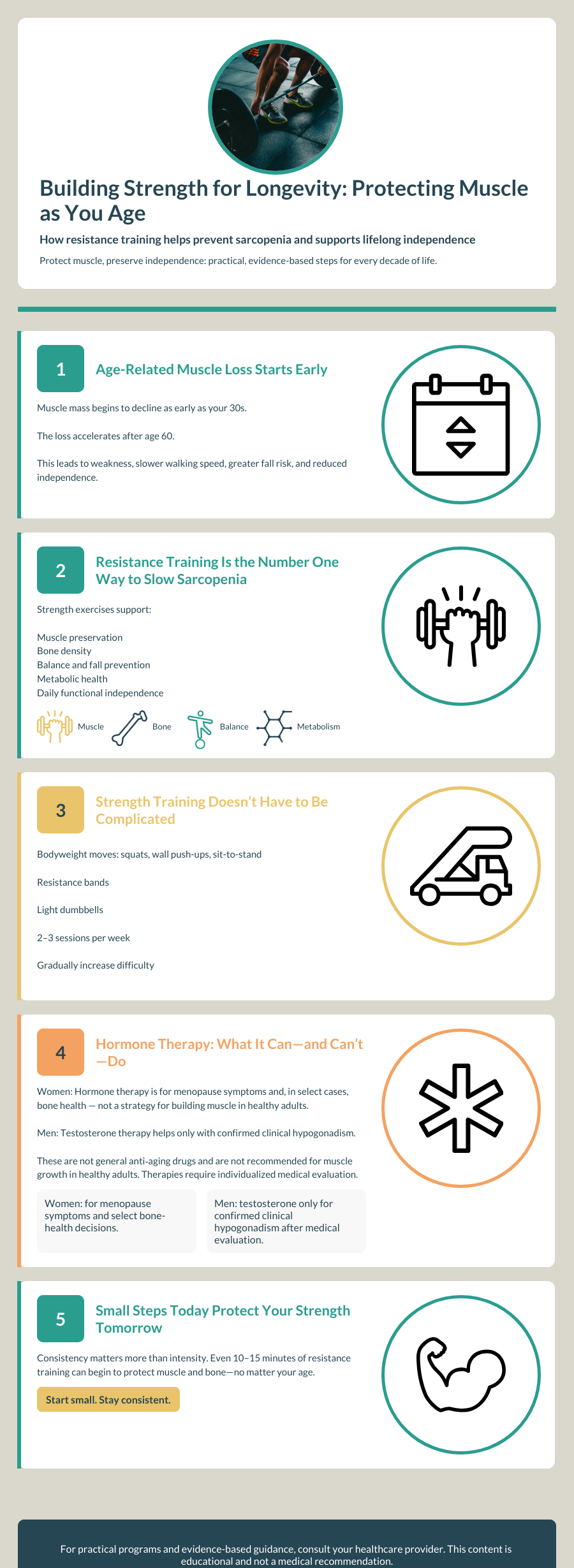
An infographic about sarcopenia and resistance based training.
As early as our 30s and 40s, we begin to lose muscle mass and strength, even if we feel “fine.” This gradual loss—sarcopenia—can accelerate in later decades and is strongly linked to slower walking speed, difficulty with daily tasks, higher fall risk, and overall frailty. The good news is that sarcopenia is not an inevitable, unstoppable slide; it’s a process we can meaningfully slow down. Regular resistance-based exercise (using body weight, bands, free weights, or machines) sends a clear signal to muscles and bones: “We still need you.” Research shows that strength training improves muscle mass, bone density, balance, and metabolic health, and it’s most effective when started before problems show up—not only after a fall or fracture. Even 2–3 days per week of simple, well-designed strength work can help preserve functional independence well into older age.
Where do hormones fit into this picture? There’s a lot of misinformation online suggesting that hormone replacement therapy (HRT) for women or testosterone replacement therapy (TRT) for men are general “anti-aging” or muscle-building solutions. In reality, major guidelines are clear:
In postmenopausal women, menopausal hormone therapy is primarily used for moderate to severe hot flashes and genitourinary symptoms, and in some cases for prevention of osteoporosis when other options aren’t suitable. It is not recommended just to prevent chronic disease or as a generic longevity aid.
In men, testosterone therapy is reserved for those with confirmed hypogonadism (symptoms + consistently low testosterone levels), mainly to improve sexual function and certain specific outcomes. It is not advised as a routine performance, aging, or prevention strategy.
Both HRT and TRT have real risks and benefits, and decisions about their use should be individualized and shared with a clinician—never driven by online hype. For most people, the foundation of long-term strength and independence remains the same: consistent resistance training, adequate protein intake, and a lifestyle that supports bone and muscle health. Hormones, when indicated, may play a supporting role—but they are not a replacement for strength work.
Call to Action
Take an honest look at your weekly routine:
Are you doing at least 2 days of resistance exercise that challenges your major muscle groups?
If not, what is one small step you can take this week—like adding a 10–15 minute bodyweight or band routine—to start protecting your future strength and independence?
If you’re curious about hormone therapy or wondering whether it’s appropriate in your situation, talk with your healthcare provider rather than relying on online claims.