

Metabolic Health & Healthy Aging: Why Blood Sugar Matters More Than You Think
Summary
Metabolic health—your body’s ability to manage blood sugar and insulin—is a major driver of how you age. Healthy insulin sensitivity supports energy, cognition, and cardiovascular health, while poor metabolic function accelerates biological aging. This week, we explore the science behind metabolic aging, why it matters now more than ever, and the evidence-based interventions—diet, movement, and select medications—that can support long-term healthspan.
Metabolic Health: A Cornerstone of Healthy Aging
More than 90% of U.S. adults have at least one marker of impaired metabolic health. Insulin resistance, abdominal fat accumulation, and high fasting glucose all trigger chronic inflammation, oxidative stress, and hormonal changes that accelerate cellular aging. Research now shows that impaired insulin sensitivity is tied not only to diabetes risk but also to faster epigenetic aging, poorer cognitive function, and increased cardiovascular risk. In other words, how your body manages glucose strongly influences how well—and how long—you live.
Diet, Exercise & Insulin Sensitivity: What the Science Shows
Clinical evidence indicates that improving insulin sensitivity can slow biological aging and, in some cases, reverse age-related biomarkers. Dietary strategies such as caloric restriction, intermittent fasting, and Mediterranean or DASH-style eating patterns have repeatedly been shown to reduce inflammation, improve metabolic markers, and even decelerate epigenetic clocks in human trials. Regular endurance or resistance exercise further enhances insulin sensitivity, and studies show that combining diet + exercise produces greater reductions in biological age than either strategy alone.
Emerging pharmacologic tools also play a role. Metformin—long used for diabetes—acts as a caloric-restriction mimetic and has shown promise in improving metabolic pathways linked to longevity, though evidence in healthy adults remains preliminary. GLP-1 receptor agonists (like semaglutide and tirzepatide), FDA-approved for diabetes and obesity, significantly improve metabolic health and reduce all-cause mortality in high-risk individuals. While direct evidence of slowed biological aging is still developing, improved insulin sensitivity is a consistent mediator of better long-term outcomes.
Metabolic Stability Is About Balance, Not Restriction
You don’t need a strict diet to support metabolic health—especially during the holidays. Small, sustainable choices have powerful effects: eating balanced meals with adequate protein, increasing fiber intake, minimizing ultra-processed foods, and taking a brief walk after meals can dramatically improve glucose control. Sleep quality, stress management, hydration, and strength training also influence insulin sensitivity. When viewed as a whole-person lifestyle, metabolic health becomes less about restriction and more about supporting your body’s natural rhythms, even during festive seasons.
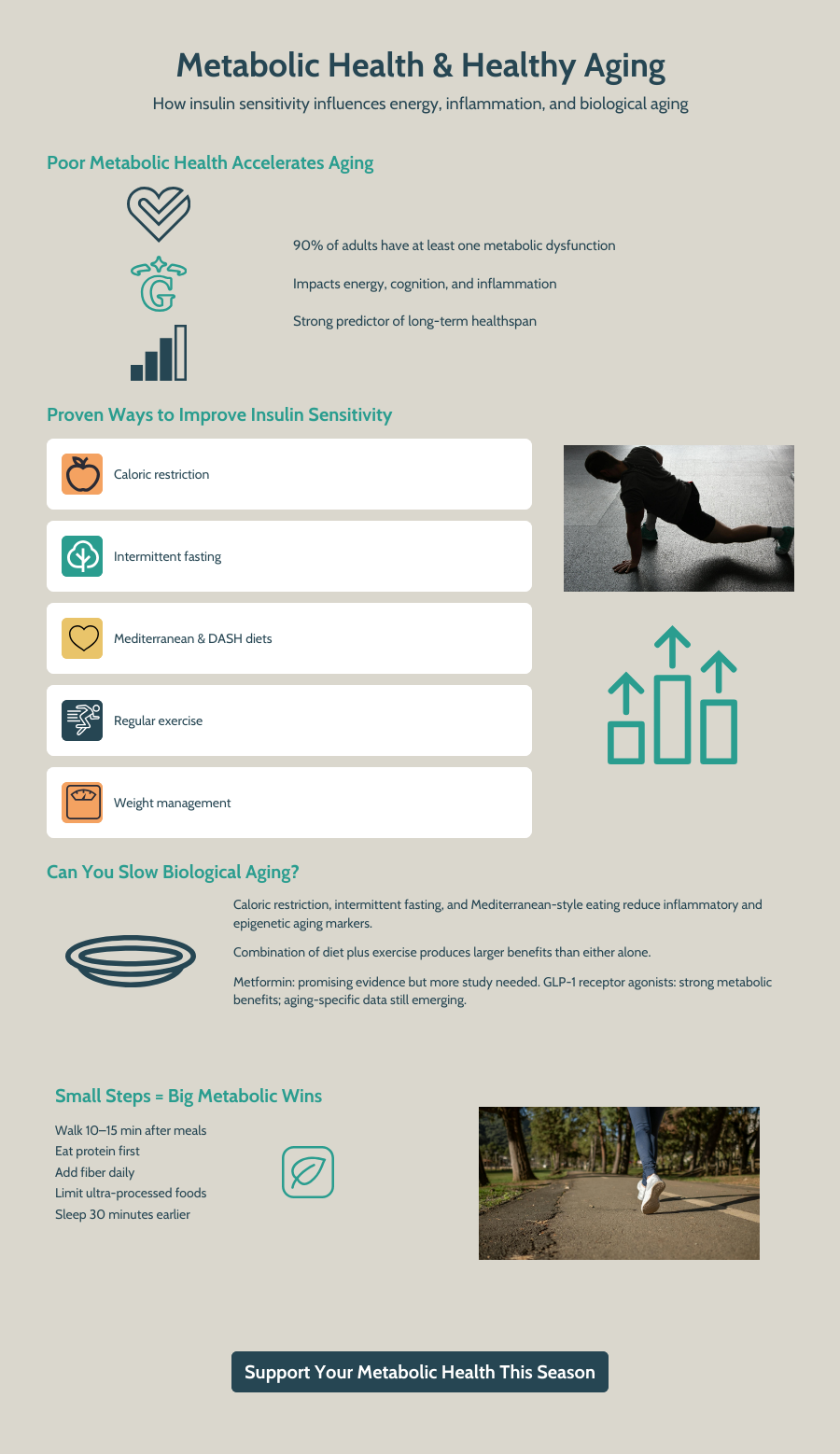
Infographic supporting metabolic health and healthy aging
Call to Action
Pick one metabolic-supporting habit this week:
Take a 10–15 minute walk after your largest meal
Add a high-fiber food to your plate
Eat protein first at meals
Swap a sugary beverage for water or tea
Go to bed 30 minutes earlier